
How Do I Resolve Drainage Issues On My Flat Roof?
Simply put, you need water to drain from your roof. It may sound simple, but it is the most important thing to keep in mind when it comes to the longevity of your roof and the condition of your commercial property. It’s important to consult a roofing professional to get the best recommendation for your roof, as all buildings are different. The top ways to avoid roof damage are:
- Schedule inspections with a pro: we will check all your drains, gutters, and scuppers to make sure the Ohio weather is not leading to a damaged roof.
- Clear all debris: make sure there are no leaves, dirt, or any other debris that builds up near drainage points throughout the year.
- Monitor for any leaks: if there are water stains inside caused by leaks, it’s important to note them and contact a professional.
- Make sure you have the correct slope so that any water that pools on your roof will move towards drainage points.
- Hire a roofing professional: even if you think you know the issue with your roof, it’s important to contact someone with years of experience diagnosing these problems.
What Causes Drainage Issues on a Commercial Roof?
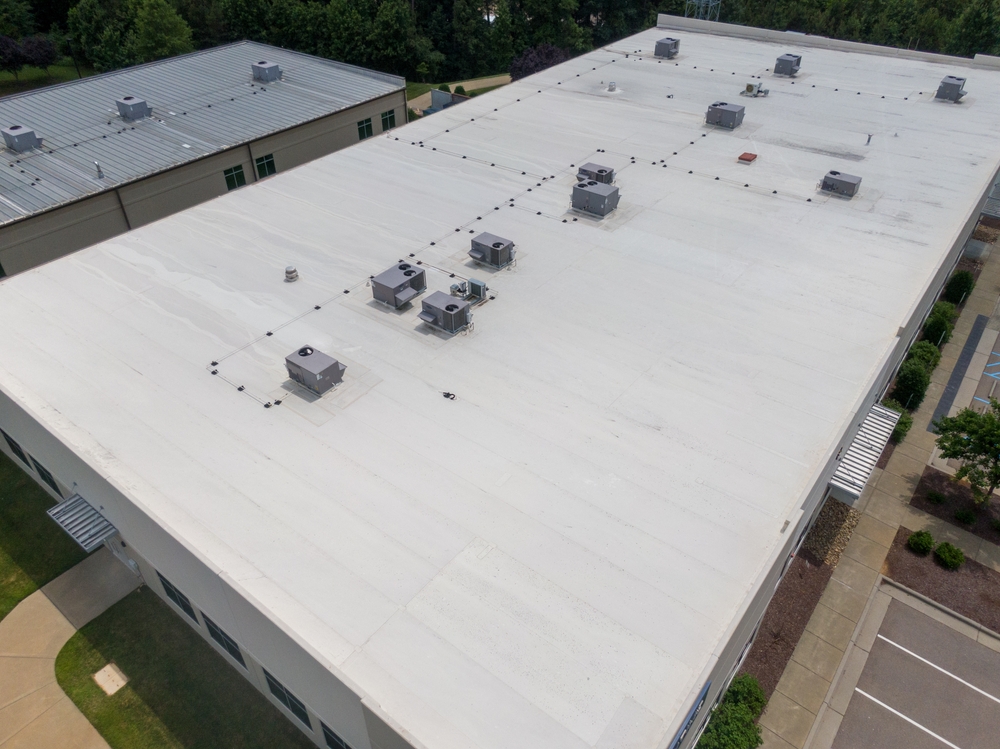
There are many possible causes for improper damage. It may be one thing, or it may be a combination of factors that lead to water pooling and roof damage for your commercial property.
- Puddles: When water from snow or rain collects on your roof, it will form puddles that can cause leaks and even structural damage to your building.
- Gutters: If your roof depends on gutters for drainage, it is essential that they are clean. If they get full over time with debris, the water will not be able to drain properly.
- Blocked scuppers: like gutters, scuppers can become blocked by debris and not able to drain water properly.
- Drain covers: if your drain covers are missing or damaged, it can lead to an accumulation of water on your roof.
- Improper drain placement: if your drains are not set up in an ideal location, they won’t be able to effectively drain water from your roof.
- Slope: Slope is one of the most effective ways to drain water. If your roof doesn’t have the correct slope, water will stay on it instead of draining.
The Dangers of Water Pooling on a Roof
The purpose of a roof is to give your building shelter from the elements, and the integrity of that is compromised when water pools on your roof. A roof cannot perform its most basic function without proper drainage. When water pools, it can lead to leaks and even damage the roofing membrane, cause structural integrity loss, mold and mildew can grow, which can lead to even bigger issues, and the foundation of your building may be at risk if water overflows near the base.
Why Flat Roof Drainage is Important
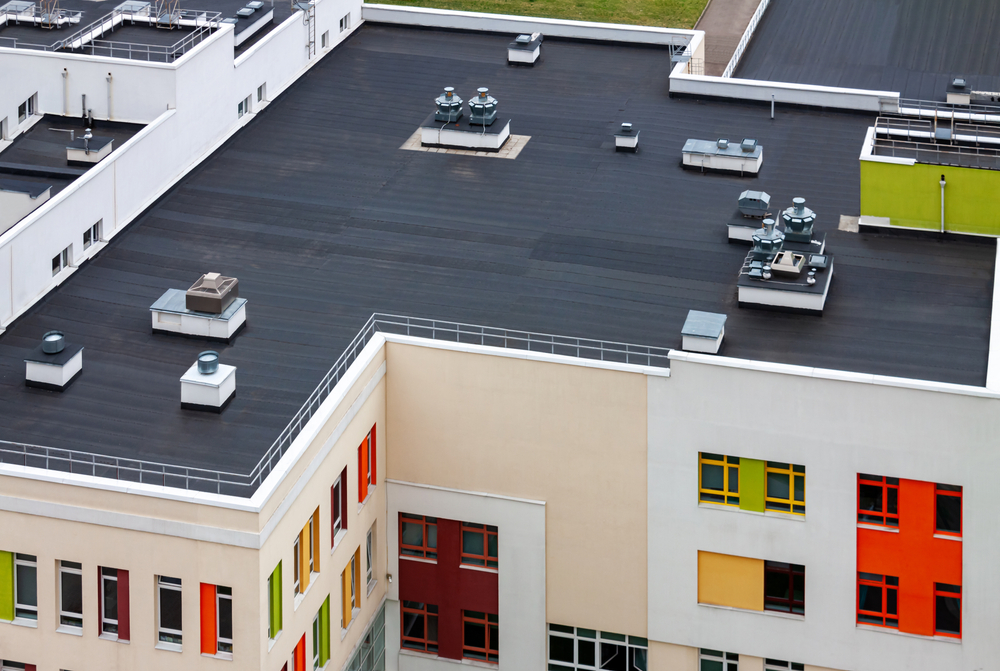
Drainage is important on every type of roof, but especially important on a flat roof. A typical roof that most people are familiar with has a noticeable slope, which allows water to drain easily instead of pooling. For a flat roof to drain properly, a few things must be taken into account to protect the integrity of your property. Not only can pooling lead to costly repairs and maintenance, but it can also impact the foundation of your building if left unattended. Things like gutters systems, scupper systems, interior drain systems, siphonic drainage systems, or tapered insulations are all ways to stop water pooling from happening. It’s important to consult a professional to determine the best course of action for your commercial property.
Type of Drainage Systems
- Scuppers: This is by far the simplest method of draining water. It involves edge openings that will work to guide water into your downspouts and away from your roof.
- Gutters: In most cases, even a flat roof will pitch in a certain direction, making gutters a useful option. Gutters will be able to catch the runoff and remove it from your roof.
- Internal drains: an interior drainage system places several drains across the roof that are connected to pipes or gutters that will move the water away from your building.
- Siphonic drainage systems: this method employs a gravity-induced vacuum pump that will get rid of water through drain openings. This method is typically used in commercial properties, as they can handle a large volume of water.
- Tapered insulation: Even though they are called “flat roofs”, most roofs will have some sort of slope to them. A tapered insulation solution will add more slope to your roof so that the water doesn’t sit in one place and pool.
How to Choose a Roof Solution
There’s no one solution to drainage for every roof. Each roof needs a custom-tailored solution that will benefit the building the most. It may be one solution, or it may be a combination of different types of drainage practices. It’s important to consult a roofing company that can help you determine the best course of action for you. Our team has years of experience serving businesses large and small in the Ohio area.
Avoid Damage with Flat Roof Drainage
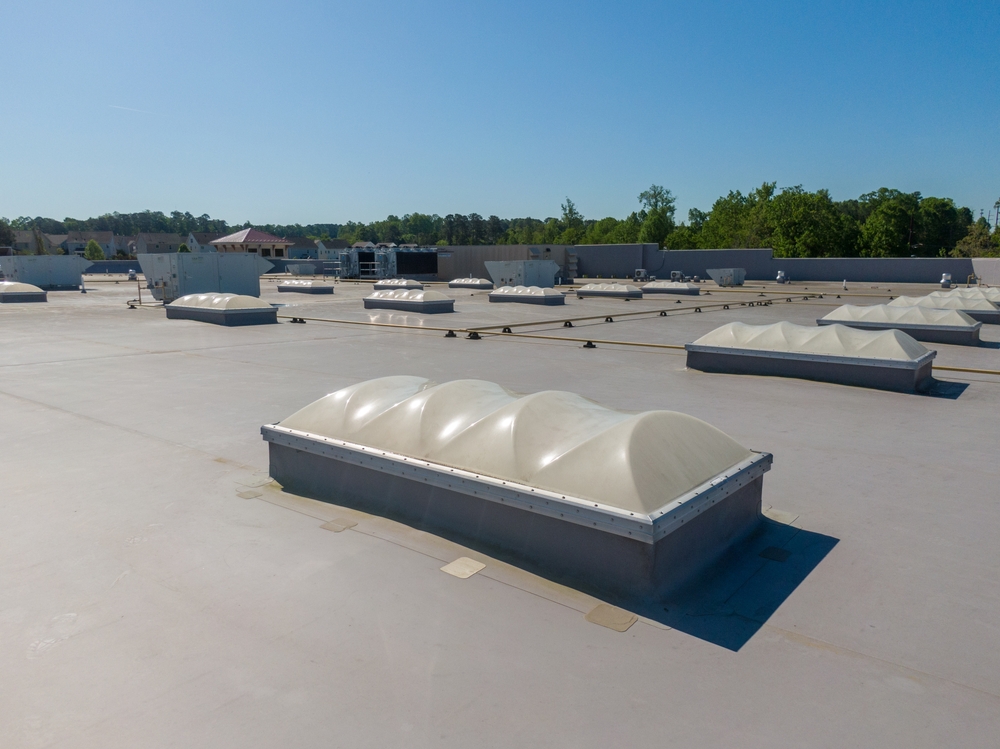
Your commercial building needs drainage. It sounds simple, but it is the most important thing you can do for your roof and building. Without it, you are opening up your property to the possibility of leaks, roof damage, mold and mildew, and foundational damage. Whether it’s through the use scuppers, gutters, internal drains, tapered insulation, or a siphonic drainage system, the integrity of your roof will be greatly increased and with proper maintenance, you can avoid costly repairs.
Contact Our Roof Team
Ready to talk through your options? Contact our team based in Ohio today, and we will put our years of expertise and experience to work for you.